
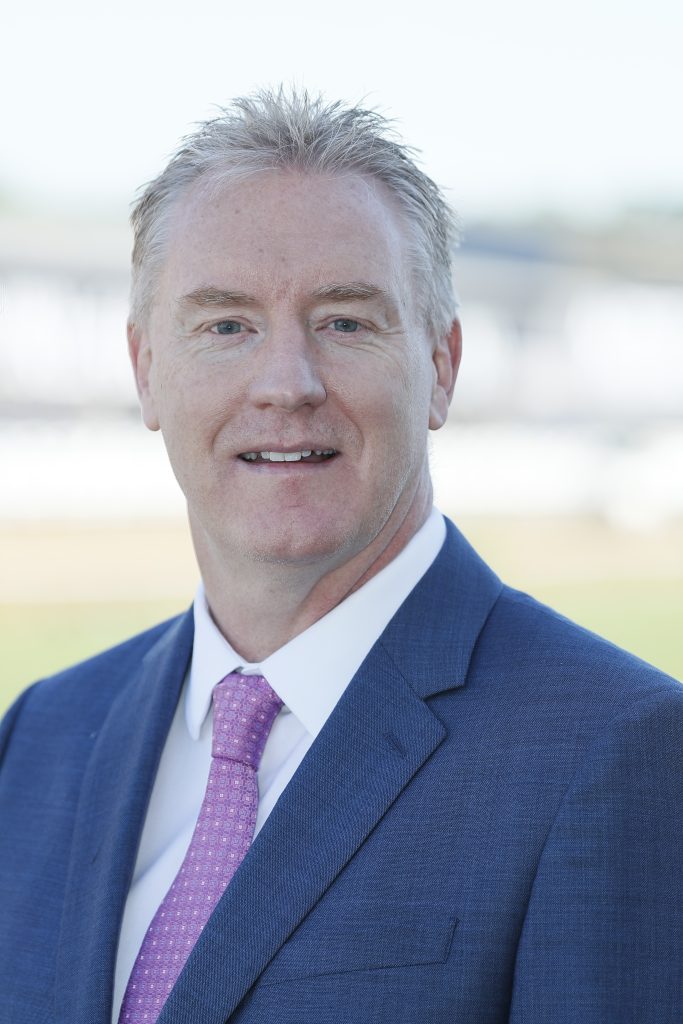
Mike Rogers (Presidente 1s/t Racieng)
ENTREVISTA EXCLUSIVA: Señor Mike Rogers (Presidente 1s/t Racing)
Entrevista: Juan Gamboa (Periodista Hípico, Perú y Editor General de Derby Race Horses)
ENTREVISTA INGLES
ENGLISH INTERVIEW
MIKE ROGERS, PRESIDENTE DE 1/ST RACING
Entrevista (HORCOS DE CARRERAS DEL DERBY – PERÚ)
MIKE ROGERS, PRESIDENT, 1/ST RACING
Interview (DERBY RACE HORSES – PERU)
Nos complace presentar al Sr. Mike Rogers y agradecerle el tiempo que dedicó a responder nuestras preguntas para el editorial de Caballos de Carreras del Derby. Agradecemos su tiempo, ya que es una persona muy ocupada que ocupa altos cargos internacionales. El Sr. Rogers es un ejecutivo sénior en el mundo de las carreras de caballos, reconocido principalmente por su papel clave en The Stronach Group (TSG) y su marca 1/ST. Presidente de 1/ST RACING: Dirige las operaciones de los principales hipódromos de la compañía en Norteamérica. Gestión de 1/ST RACING: Supervisa instalaciones emblemáticas como Santa Anita Park (California) y Gulfstream Park (Florida). Transición en Maryland: Como presidente interino del Maryland Jockey Club, lideró la transición de los hipódromos de Pimlico (sede del Preakness Stakes) y Laurel Park a la entidad hípica estatal.
We are pleased to introduce Mr. Mike Rogers, and to thank him for his time in answering our questions for our Derby Race Horses editorial, and we appreciate his time, as he is a very busy person holding high-level international positions. Mr. Rogers is a senior executive in the world of horse racing, recognized mainly for his key role at The Stronach Group (TSG) and its brand 1/ST. President, 1/ST RACING: He leads the operations of the company’s main racetracks in North America. Management of 1/ST RACING: He oversees iconic facilities such as Santa Anita Park (California) and Gulfstream Park (Florida). Transition in Maryland: As Interim President of the Maryland Jockey Club, he led the transition of the racetracks at Pimlico (home of the Preakness Stakes) and Laurel Park to the state-led racing entity.
Mike Rogers y su trayectoria profesional y otros cargos: El Sr. Rogers cuenta con una trayectoria de más de 30 años en la industria, desde puestos de nivel básico como mozo de cuadra hasta la alta dirección: Adena Springs: Trabajó durante años como gerente comercial de operaciones de cría. Breeders’ Cup: Es miembro del Consejo de Administración de 14 personas que supervisa este evento mundial. Otros consejos: Participa activamente en organizaciones clave como la NTRA (Asociación Nacional de Carreras de Caballos Pura Sangre), Equibase y la Thoroughbred Aftercare Alliance (TAA), donde promueve el bienestar de los caballos tras su retiro. Innovación: Fue una de las figuras clave en la creación de la Pegasus World Cup, una de las carreras más importantes de Norteamérica.
Mike Rogers and his career and other positions:
Mr. Rogers has a career of more than 30 years in the industry, starting from entry-level positions such as a stable hand and rising to senior management: Adena Springs: He worked for years as commercial manager of breeding operations. Breeders’ Cup: He is a member of the 14-person Board of Directors that oversees this global event. Other Boards: He actively participates in key organizations such as the NTRA (National Thoroughbred Racing Association), Equibase, and the Thoroughbred Aftercare Alliance (TAA), where he promotes the welfare of horses after retirement. Innovation: He was one of the main figures behind the creation of the Pegasus World Cup, which is one of North America’s richest races.
1: DRH) Sr. Rogers, antes que nada, gracias por su tiempo con nuestro equipo editorial. Seremos breves y directos. ¿Cuál es la situación actual del Hipódromo de Pimlico y cómo avanza su renovación?
MR: El 1 de julio de 2024, como parte del histórico acuerdo alcanzado con el Estado de Maryland, 1/ST transfirió la propiedad del Hipódromo de Pimlico al estado. La Autoridad de Estadios de Maryland está liderando la remodelación de Pimlico, la cual ya está en marcha. Ya se han realizado las demoliciones y se ha seleccionado una empresa constructora.
2: DRH) ¿Cuál es la situación actual de The Stronach Group y de los profesionales de 1/ST? Cuenta con una gestión, marketing y una plataforma de muy alto nivel. ¿Qué nos puede decir?
MR: Como operador líder de carreras de caballos pura sangre y apuestas mutuas en Norteamérica, contamos con un equipo sólido y experimentado en las divisiones de carreras, juegos, contenido y entretenimiento de 1/ST. Nos centramos en nuestros activos principales de carreras, en brindar una experiencia superior a jinetes y amazonas, aficionados y clientes, y en la evolución de nuestro deporte para la próxima generación.
3: DRH) Sr. Rogers, se comenta mucho en el mundo de las carreras de caballos que el hipódromo Gulfstream Park dejará de operar en el futuro. ¿Qué nos puede adelantar?
MR: Estamos trabajando de buena fe con todas las partes para llegar a un acuerdo que beneficie el futuro de las carreras de caballos pura sangre en Florida. Mantener el statu quo ya no es una opción. Somos optimistas de que es posible una resolución colectiva que respalde el futuro sostenible a largo plazo de las carreras de caballos en Florida. Ese es nuestro objetivo.
4: DRH) El Preakness se celebrará este sábado 16 de mayo de 2026. ¿Cómo va la organización general y qué novedades habrá en ese día tan importante?
MR: Estamos deseando colaborar con el Maryland Jockey Club para organizar el Preakness 151, que marcará la última vez que 1/ST organice el evento, tal como se estipuló en el acuerdo alcanzado con el Estado de Maryland en 2024. El fin de semana del Preakness 151 es un momento emocionante para los profesionales del mundo hípico, los aficionados a las carreras y los visitantes, que podrán disfrutar del Preakness Stakes en Laurel Park por primera vez en la historia del evento. Este año tendrá un ambiente diferente, teniendo en cuenta la extensión interior y exterior de Laurel Park, pero, como siempre, 1/ST se compromete a ofrecer un fin de semana de carreras, hospitalidad y entretenimiento de primer nivel.
5: DRH) Las carreras de caballos norteamericanas gozan de gran reconocimiento a nivel mundial, y para usted, la pasión por las carreras de pura sangre se traduce en la «Triple Corona». ¿Qué significa este tipo de carrera para las carreras de caballos en Norteamérica?
MR: La emoción de la Triple Corona en las carreras norteamericanas es incomparable. Es una oportunidad para que el mundo preste atención a lo mejor de nuestro deporte y para que las carreras sean celebradas. Siempre es emocionante ver a aficionados, tanto ocasionales como de toda la vida, reunirse para formar parte de una de las tradiciones deportivas más singulares y una de las marcas más emblemáticas de la historia del deporte estadounidense.
6: DRH) Cambiando de tema, dejando de lado su trabajo en Stronach Group, queríamos preguntarle sobre las carreras de caballos norteamericanas en general, como la cría, la seguridad y el bienestar de los caballos, la sanidad animal y las apuestas de los aficionados. ¿Cuál sería su opinión?
MR: Mi pasión de toda la vida por los caballos y mi amor por este deporte son bien conocidos. Me siento alentado por el trabajo realizado en los últimos años para priorizar la salud y la seguridad de los caballos, que son el corazón de nuestro deporte. Me enorgullece formar parte del equipo de 1/ST que aboga por el bienestar y el cuidado de los caballos antes, durante y después de sus carreras. Creo firmemente que todos los involucrados en las carreras comparten la responsabilidad de cuidar a los caballos, lo que exige integridad y un claro compromiso con el bienestar de estos animales. La cría de pura sangre en Norteamérica es la base de nuestro deporte y un pilar fundamental de la industria hípica mundial, produciendo caballos que compiten al más alto nivel en todo el mundo. Las decisiones tomadas en la etapa de cría no solo determinan la calidad de las carreras, sino también la sostenibilidad a largo plazo de la industria. Desde mi punto de vista, el enfoque debe estar en producir caballos sanos y resistentes que puedan competir a un alto nivel y tener oportunidades más allá de sus carreras. Las apuestas y los juegos han experimentado una transformación radical. La tecnología permite a los aficionados ver, consumir y apostar en contenido hípico de todo el mundo. Como industria, si las carreras de caballos en Norteamérica quieren prosperar en el competitivo panorama deportivo y del entretenimiento, debemos seguir centrándonos en ofrecer un producto de primer nivel, abrir las apuestas a nuevos mercados y mejorar la experiencia del cliente. Creo que las carreras de caballos en Norteamérica se encuentran en una encrucijada. En mi opinión, veo dos opciones: mantener el statu quo o realizar inversiones significativas y adaptarnos a las cambiantes demandas de una nueva generación. Prefiero la segunda opción.
7: DRH) Ahora pasamos a las carreras de caballos en Latinoamérica, Sr. Rogers. El 26 de abril se celebrará la próxima carrera latinoamericana en el Jockey Club de Perú. ¿Cómo calificaría la carrera más importante de Latinoamérica?
MR: El Gran Premio Latinoamericano es un gran ejemplo de lo que hace especial a este deporte a nivel mundial. Reúne a los mejores caballos de toda la región y demuestra la fortaleza y la calidad de las carreras en Latinoamérica. He tenido la oportunidad de asistir a la carrera en el pasado, y la emoción y la energía que se viven ese día son realmente increíbles, un gran reflejo de la pasión que existe por las carreras de caballos en toda Latinoamérica. Desde mi punto de vista, carreras como esta son importantes porque resaltan la calidad de los programas internacionales de cría y carreras, y refuerzan el valor de la colaboración dentro de este deporte.
A medida que seguimos mirando hacia el futuro de las carreras de caballos pura sangre, eventos como el Gran Premio Latinoamericano desempeñan un papel importante en el fortalecimiento de las relaciones globales y en el engrandecimiento del deporte en su conjunto.
8: DRH: Para concluir esta importante entrevista con usted, Sr. Rogers, y agradecerle su tiempo, que para nosotros es digno de mención, le preguntamos: ¿Conoce Perú? ¿Ha probado la gastronomía peruana? ¿Qué opina de Perú?
MR: Sí, he tenido la oportunidad de visitar Perú y me causó una gran impresión. Es un país increíble con una cultura rica y gente maravillosa. También he tenido la oportunidad de probar la gastronomía peruana, que considero excelente y una de las mejores del mundo. La primera vez que probé el ceviche fue precisamente durante mi visita a Perú, y aunque lo he probado en otros lugares desde entonces, nunca se ha acercado a la calidad del que experimenté allí. Perú es un lugar maravilloso y he disfrutado mucho de mis experiencias allí.
9: DRH: Sr. Rogers, nos despedimos y le agradecemos nuevamente su tiempo. Antes de continuar, le pedimos que envíe un mensaje y saludos a todos los aficionados a las carreras de caballos del mundo.
MR: Es un honor formar parte de este gran deporte. Gracias a los aficionados de Perú, Norteamérica y de todo el mundo por hacer posible que jinetes como yo nos levantemos cada día con pasión y propósito.
ENGLISH INTERVIEW
1: DRH) Mr. Rogers, first of all, thank you for your time with our editorial team. We will be brief and direct. What is the current state of Pimlico Racetrack and how is progress on its renovation?
MR: On July 1, 2024, as part of the historic agreement reached with the State of Maryland, 1/ST transferred ownership of Pimlico Race Course to the state. The Maryland Stadium Authority is leading the redevelopment of Pimlico, which is underway. Demolition has occurred and a construction company has been selected.
2: DRH) What is the current state of The Stronach Group, and the professionals of 1/ST? It has management, marketing, and a platform of a very high level. What can you tell us?
MR: As North America’s leading Thoroughbred racing and pari-mutuel operator, we have a robust and experienced team across 1/ST’s racing, gaming, content and entertainment divisions. Our focus is on our core racing assets, delivering a superior experience for horsemen and women, fans and customers, and on evolving our sport for the next generation.
3: DRH) Mr. Rogers, there is much talk in the horse racing world that Gulfstream Park racetrack will no longer operate in the future. What can you tell us in advance?
MR: We are working in good faith with all sides to reach an agreement in the best interests of the future of Thoroughbred racing in Florida. The status quo is no longer an option there. We are optimistic that a collective resolution that supports the long-term, sustainable future of horse racing in Florida is possible. That is our goal.
4: DRH) The Preakness is coming this Saturday, May 16, 2026. How is the general organization going and what new developments will there be on that very important day?
MR: We are looking forward to working in collaboration with the Maryland Jockey Club to host Preakness 151, which will mark 1/ST’s last time hosting the event as was outlined in the agreement reached with the State of Maryland in 2024. Preakness 151 weekend is an exciting moment for horsemen and women, racing fans and guests to experience the Preakness Stakes at Laurel Park for the first-time in the history of the event. This year will have a different feel taking into consideration the interior and exterior footprint of Laurel Park, but as always 1/ST is committed to a world-class weekend of racing, hospitality and entertainment.
5: DRH) North American horse racing is very well recognized in the global horse racing world, and the transcendental passion for Thoroughbred racing for you is “THE TRIPLE CROWN.” What does this type of race mean for North American horse racing?
MR: The excitement of the Triple Crown in North American racing is unmatched. It is an opportunity for the world to turn their attention to the best in our sport and for racing to be celebrated. It is always a thrill to see casual and life-long fans come together to be part of one of the most unique sporting traditions and storied brands in American sports history.
6: DRH) Changing the subject from your work with responsibility at the Stronach Group, we wanted to ask you about North American horse racing in general, such as breeding, horse safety and welfare, animal health, and betting by fans. What would your opinion be?
MR: My lifelong passion for horses and my love for this sport is well known. I am encouraged by the work that has been done over the past several years to prioritize the health and safety of the horses who are the heart of our sport. I am proud to be part of the team at 1/ST advocating for the welfare and care of horses before, during and following their racing careers. I firmly believe that everyone involved in racing shares a responsibility for horses, and that requires integrity and a clear commitment to doing right by these animals. Thoroughbred breeding in North America is the foundation of our sport and a cornerstone of the global racing industry, producing horses that compete at the highest levels around the world. The decisions made at the breeding stage shape not only the quality of racing, but the long-term sustainability of the industry. From my perspective, the focus should be on producing sound, durable horses that can compete at a high level and have opportunities beyond their racing careers. Wagering and gaming has experienced a huge shift. Technology allows fans to stream, consume and bet on racing content from around the world. As an industry, if North American racing is going to thrive in the highly competitive sports and entertainment landscape, we need to continue to focus on delivering a premier racing product, opening betting pools to new markets and on improving the customer experience. I believe North American racing is at a crossroads. In my view, I see two options; we can maintain status quo or make meaningful investments and embrace the changing demands of a new generation. I prefer the latter.
7: DRH) Now we move to Latin American horse racing, Mr. Rogers. This April 26, the next Latin American race will be held at the Jockey Club of Peru. How do you rate the most important race in Latin America?
MR: The Gran Premio Latinoamericano is a great example of what makes this sport special on a global scale. It brings together top horses from across the region and showcases the strength and depth of racing in Latin America. I’ve had the opportunity to attend the race in the past, and the excitement and energy on the day are truly amazing and it’s a great reflection of the passion that exists for racing across in Latin America. From my perspective, races like this are important because they highlight the quality of international breeding and racing programs, and reinforce the value of collaboration within the sport. As we continue to look at the future of Thoroughbred racing, events like the Gran Premio Latinoamericano play an important role in strengthening global relationships and elevating the sport as a whole.
8: DRH: To conclude this important interview with you, Mr. Rogers, and to thank you for your time, which for us is worth highlighting. The question is: Do you know Peru? Have you tried Peruvian cuisine, and how would you rate Peru?
MR: Yes, I’ve had the opportunity to visit Peru, and it left a very strong impression on me. It’s an incredible country with a rich culture and great people. I’ve also had the chance to experience Peruvian cuisine, which I would rate very highly and it’s one of the best in the world in my view. The first time I ever tried ceviche was actually during my visit to Peru, and while I’ve had it in other places since, it’s never come close to being as good as what I experienced in Peru. Peru is a amazing place, and I’ve really enjoyed my experiences there.
9: DRH) Mr. Rogers, we say goodbye and thank you again for your time. Before that, we ask if you could send your message and greetings to all horse racing fans around the world.
MR: To be able to be part of this great sport is an honor. Thank you to the fans in Peru, North America and worldwide for making it possible for horsemen like me to wake up every day with passion and purpose.